
The Space of Contemporary Public Libraries. Train Station, Palm House, Department Store, City Passage, Cinema... As Inspiration
DOI:
https://doi.org/10.64770/zsb2024a2Keywords:
library, modernization, management, space, offers, technology, libra- ry architecture, role of small, medium, and large public libraries.Abstract
Contemporary libraries are most often organized as multimedia centers of knowledge, culture, and information. They are evolving, drawing inspiration from European, mostly Scandinavian, models. In addition to the traditional functions of libraries (information transfer, collection gathering, and preservation), they are beginning to implement a model of an open, hybrid li-brary focused on engaging with the community. The author discusses how these changes are taking place and whether the "identity of the public library" is being lost in the process, what the organizational culture of libraries looks like, and finally, whether these changes require a "new space" when the current one is suboptimal. He addresses questions such as: How to convince librarians to embrace change? How to engage the media in promoting new library services? What are the limits of the new offers? What should be done to ensure that the "third place" service does not overshadow what is most important in the library? The article discusses new spaces, functionalities, and services in libraries, using examples from Polish library practices. The author also explores issues related to the use of physical space (both urban and post-industrial) by contemporary libraries.
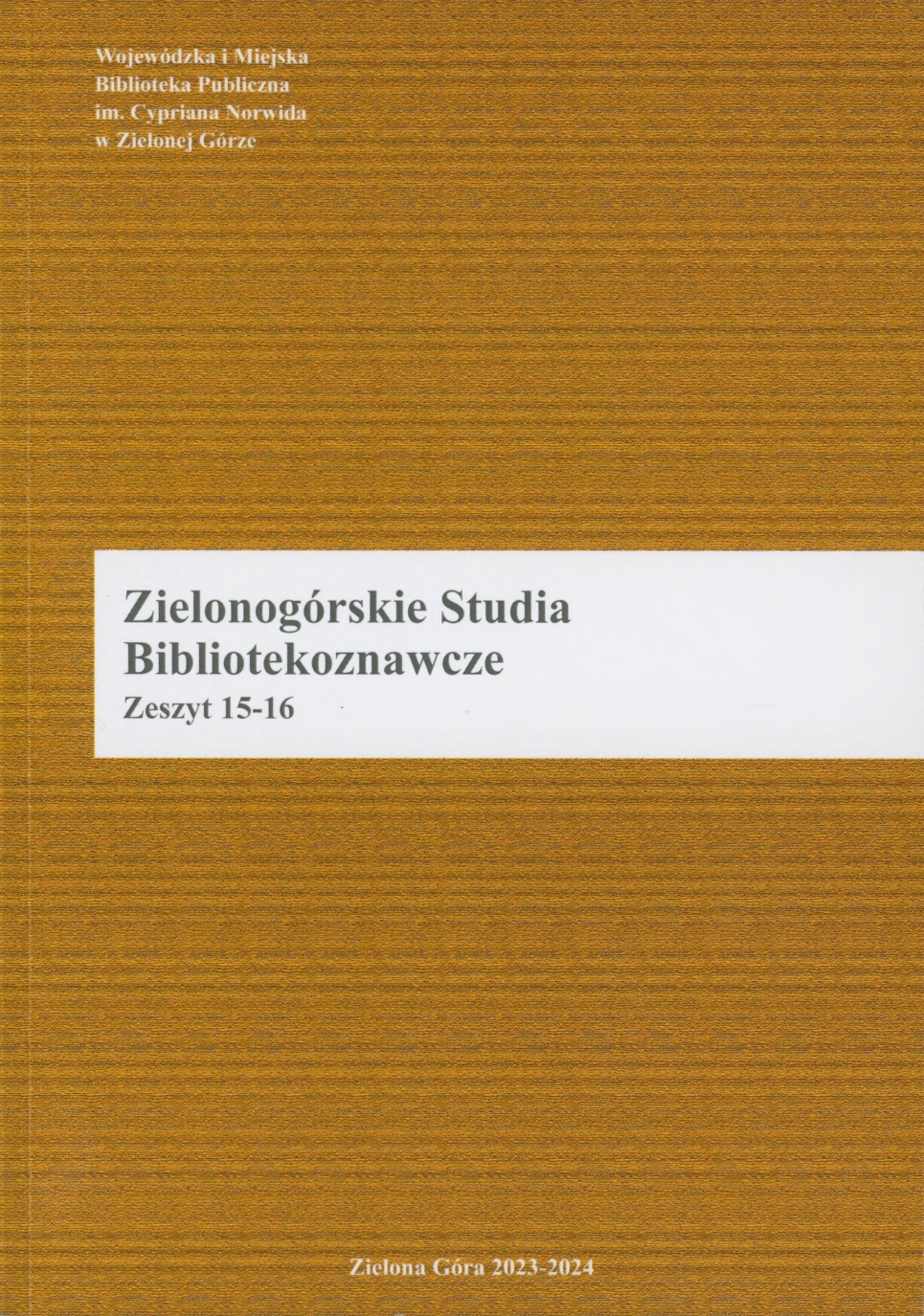
Published
Issue
Section
License
Copyright (c) 2026 © WiMBP im. Cypriana Norwida w Zielonej Górze

This work is licensed under a Creative Commons Attribution-NonCommercial-NoDerivatives 4.0 International License.
CC BY-NC-ND 4.0
Uznanie autorstwa - Użycie niekomercyjne - Bez Utworów Zależnych 4.0 Międzynarodowa
Wolno:
- Dzielenie się — kopiuj i rozpowszechniaj utwór w dowolnym medium i formacie
- Licencjodawca nie może odwołać udzielonych praw, o ile są przestrzegane warunki licencji.
Na następujących warunkach:
- Uznanie autorstwa — Utwór należy odpowiednio oznaczyć, podać link do licencji i wskazać jeśli zostały dokonane w nim zmiany . Możesz to zrobić w dowolny, rozsądny sposób, o ile nie sugeruje to udzielania prze licencjodawcę poparcia dla Ciebie lub sposobu, w jaki wykorzystujesz ten utwór.
- Użycie niekomercyjne — Nie należy wykorzystywać utworu do celów komercyjnych
- Bez utworów zależnych — Remiksując, przetwarzając lub tworząc na podstawie utworu, nie wolno rozpowszechniać zmodyfikowanych treści.
Brak dodatkowych ograniczeń — Nie możesz korzystać ze środków prawnych lub technologicznych, które ograniczają innych w korzystaniu z utworu na warunkach określonych w licencji.